HIPSS Health System policy LAB
Empowering Change Agents to Lead the Decade of Healthcare Transformation
The PPI health system policy has been co-created by AQuAS, assuming a role as PPI Health System Policy advisor, to provide a framework as a system-level service targetting health system’s transformation. In it, demand-side change agents will address, improve and share their projects, policies and strategies to foster public procurement of innovation as a vehicle for the adoption of transformative technologies and innovative interventions.
This PPI policy LAB is structured around a journey, fruit of a structured research to define a framework for systemic transformation, and service definition that has been shaped through collaborative engagement, expert interviews, and that can be reviewed in the four reports that explain the inception of this LAB, the framework, and the journey.
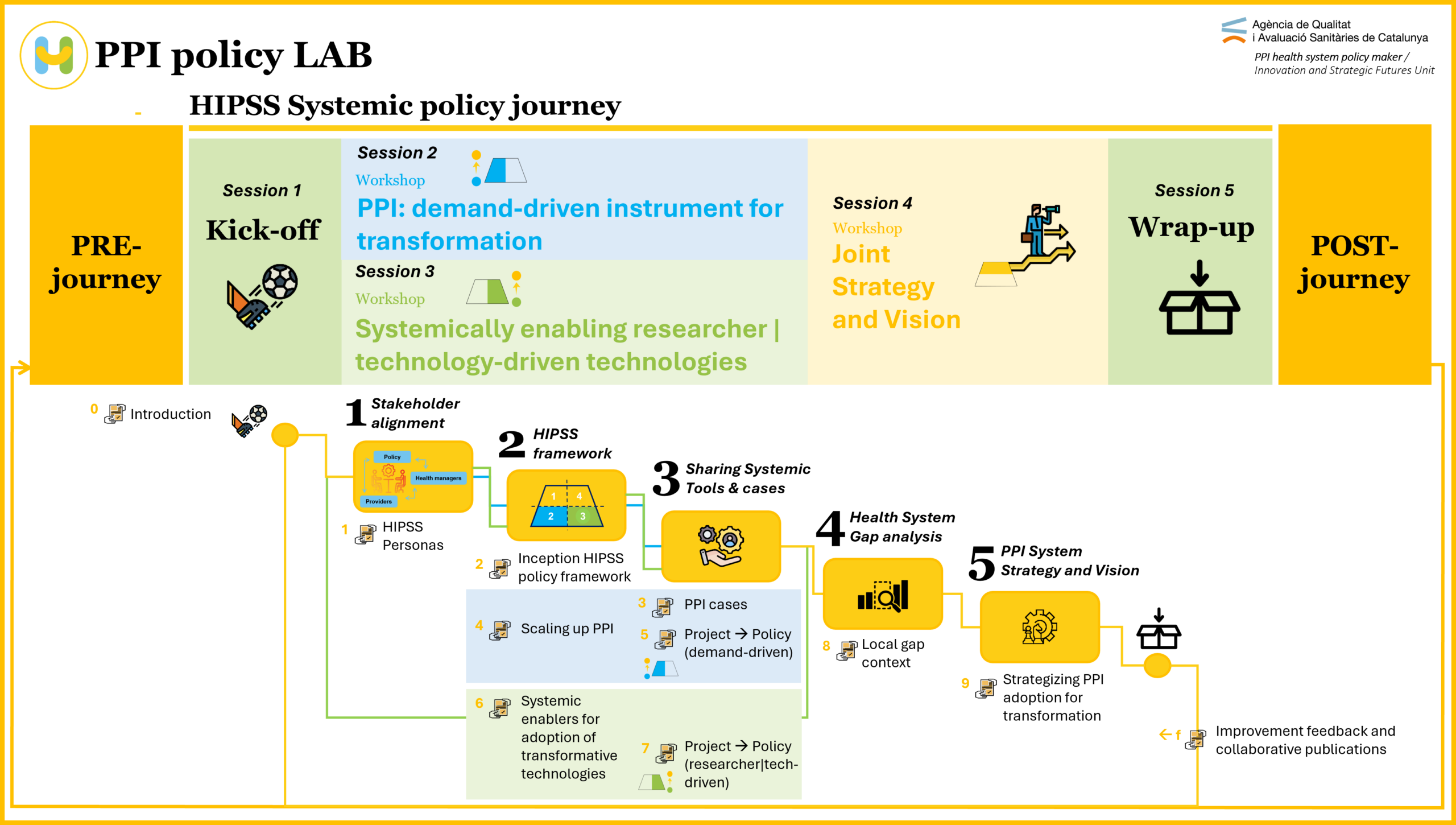
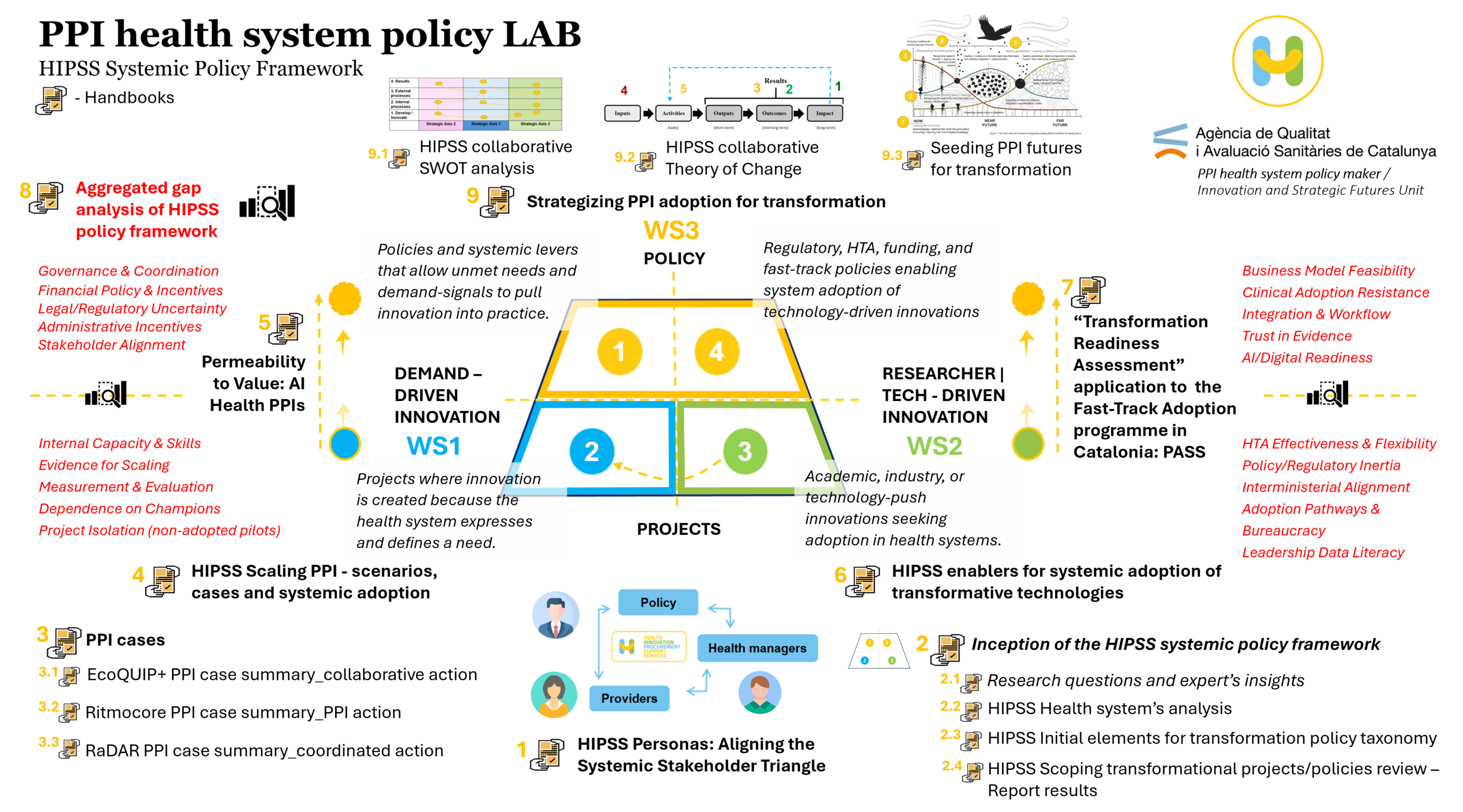
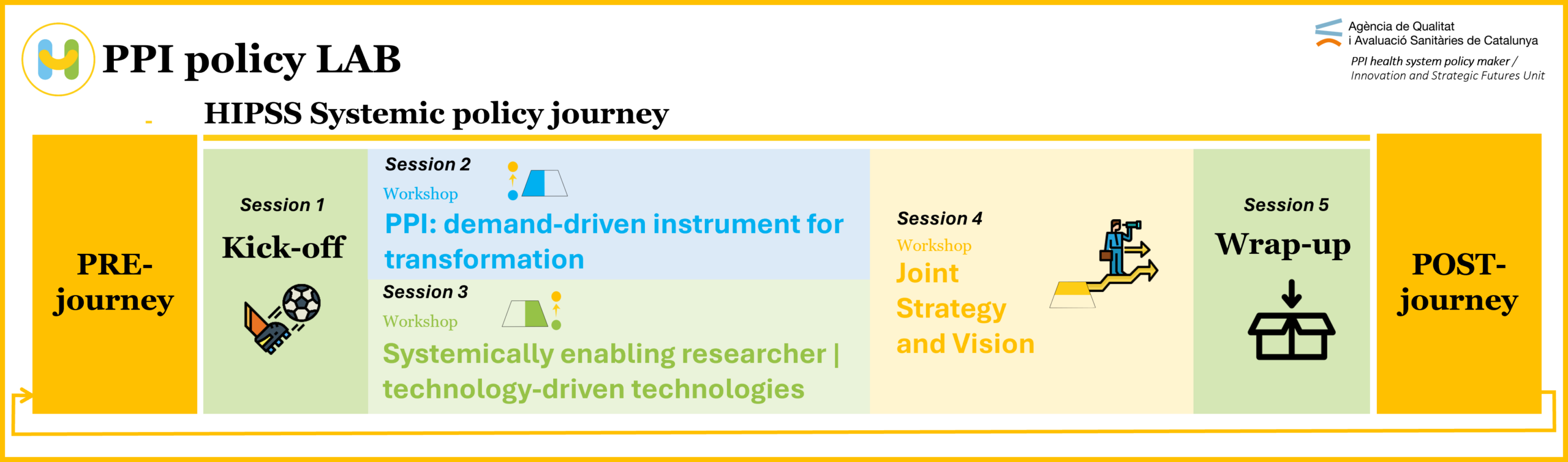
First, let’s present the LAB as five sessions to congregate different change agents to share 5 sessions together to embark on the HIPSS systemic policy journey by naviting its journey, with the help of AQuAS in the role of PPI Healths System policy advisor, and with the help of 9 categories of handbooks that will aid this journey with the structured knowledge built in the HIPSS project interactions, and in the iterations of this journey.
The PPI Health System Policy Lab is delivered through a structured series of five interactive sessions designed to transition participants from theoretical concepts to actionable local strategies. This journey begins with a foundational Kick-off to align expectations and introduce core methodologies, followed by three specialized Workshops that tackle the distinct challenges of demand-driven scaling, technology-push enablers, and long-term strategic visioning. The process culminates in a Wrap-up session where collective learnings are synthesized and future paths for the community of practice are defined, ensuring that change agents leave with the tools necessary to turn procurement into a powerful lever for system modernization.
The 5 Sessions of the Lab
Session 1: Kick-off of the journey
Kick-off Session (60 min): This session serves as the entry point for “Change Agents,” introducing the Lab’s pilot methodology and the robust research foundations supporting the HIPSS framework. Participants establish a shared glossary—defining terms like “Systemic Transformation” and “Value-Based Healthcare”—while aligning their institutional mandates to ensure a collective commitment to the transformation journey ahead.
Handbooks
0 Introduction
0 Introduction to the HIPSS Systemic Policy Framework
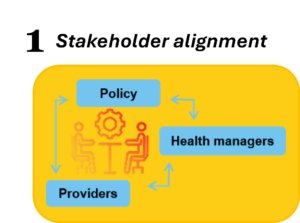
1 HIPSS Personas
1 HIPSS Personas: Aligning the Systemic Stakeholder Triangle
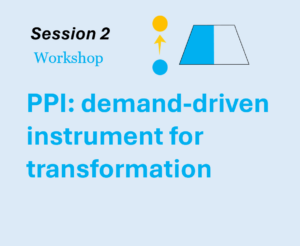
Session 2: PPI - Demand-driven instrument for transformation
Workshop 1: Scaling Up PPI (90 min): Focused on the “Demand-Pull” side of the innovation framework, this session explores how to transition isolated pilot projects into system-wide policies. Using successful cases like Ritmocore and RaDAR as blueprints, change agents apply the “Permeability to Value” methodology to design value-based adoption pathways that address prioritized clinical needs.
Handbooks
2 Inception of the HIPSS systemic policy framework
2.1 Research questions and expert’s insights
2.2 HIPSS Health system’s analysis
2.3 HIPSS Initial elements for transformation policy taxonomy
2.4 HIPSS Scoping transformational projects/policies review – Report results
3 PPI cases
3.1 EcoQUIP+ PPI case summary: collaborative action
3.2 Ritmocore PPI case summary: PPI action
3.3 RaDAR PPI case summary: coordinated action
4 Scaling up PPI
4 HIPSS Scaling PPI – scenarios, cases and systemic adoption
5 Project > Policy (demand-driven)
5 Permeability to Value: AI Health PPIs (Report Catalan case)
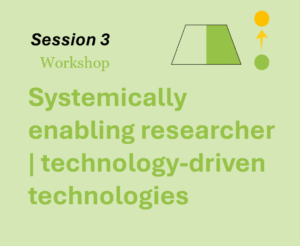
Session 3: Systemic enablers to adopt transformative technologies
Workshop 2: Activating Systemic Enablers (90 min): This session addresses the “Technology-Push” perspective, examining how to sustainably adopt emergent researcher-driven technologies like AI and Genomics. Change agents utilize “Transformation Readiness Assessments” to evaluate their system’s capacity across technological, skills-based, structural, and cultural dimensions, identifying the “invisible architecture” required to host transformative innovation.
Handbooks
6. Systemic enablers for adoption of transformative technologies
6. Enabling Systemic Adoption of Transformative Health Technologies
7. Project > Policy (researcher|tech-driven)
7. Transformation Readiness Assessment application to the Fast-Track Adoption (Report Catalan PASS)
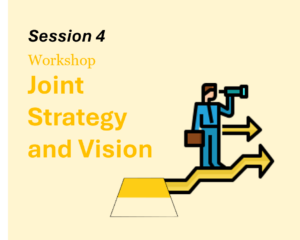
Session 4: Strategizing transformation
Workshop 3: Joint Strategy and Vision (90 min): Moving beyond project-level thinking, this workshop consolidates findings from local gap analyses to build a causative results chain. Using “Theory of Change” and “Three Horizons” methodologies, multi-stakeholder teams co-construct a long-term roadmap to seed a resilient healthcare future where strategic innovation procurement is mainstreamed.
Handbooks
8. HIPSS Aggregated gap analysis
8. Contextualizing Systemic Gap Analysis to local case
9. Strategizing PPI adoption for transformation
9.1 Strategizing Transformation: SWOT Analysis: Internal and External Factors
9.2 Collaborative Theory of Change results
9.3 Seeding Futures through PPI adoption results
Session 5: Wrapping up the journey
Wrap-up Session (60 min): The final session provides a space for retrospective reflection and collective feedback on the journey’s applicability to local contexts. It focuses on the “afterlife process,” transforming workshop participants into a permanent community of practice dedicated to the iterative improvement of systemic innovation policies.
Handbooks
< f Continuos improvements and NEW knowledge generation
10. Improvement feedback and collaborative publications
The HIPSS systemic policy journey
Interrelated lab sessions, journey and handbooks
The HIPSS Systemic Policy Journey is a guided, five-step transformation service designed to empower healthcare “change agents” to move beyond isolated pilot projects toward a unified, system-wide modernization strategy. This iterative process provides a structured roadmap for multi-stakeholder teams—the HIPSS Stakeholder Triangle—to navigate the complexities of innovation adoption by aligning policy intent with institutional capacity and cultural readiness. Supported by specialized handbooks and a hands-on workbook, the journey serves as the core operational mechanism of the PPI Health System Policy Lab, ensuring that collective intelligence from diverse adoption experiences is captured, adapted, and applied to drive long-term structural change within local health systems.
The 5 Steps of the Systemic Journey
Step 1: Dynamizing the HIPSS Systemic Stakeholder Triangle
The first step focuses on getting the right people aligned by bringing together policy-makers, health managers, and providers to establish a shared mission. In this phase, participants review and validate professional persona profiles to ensure all institutional perspectives are represented, building the early trust and shared ownership required to lead a national or regional transformation.
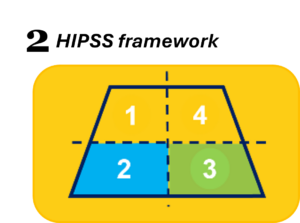
Step 2: HIPSS Systemic Policy Framework: Joint Review and Local Application
Change agents use the Trapezium Model to clarify priorities and decide where intervention is most needed—whether at the policy or project level, and whether for demand-driven or tech-driven innovation. By applying this framework locally, teams can identify “strategic voids” and use a common structure to align their specific efforts with broader system goals.
Step 3: Sharing Systemic Tools for PPI/VBP Deployment
This step involves learning from real-world examples through a repository of validated methodologies and case studies, such as the Catalan AI Health PPI program. Participants review and adapt tools like “Permeability to Value” and “Transformation Readiness Assessments” to their own contexts, bridging the “valley of death” between research and routine clinical adoption.
Step 4: Collaborative Health System Gap Analysis
Teams conduct a diagnostic assessment to identify what is blocking progress by mapping the specific technological, legal, structural, or cultural barriers unique to their environment. By focusing on real constraints rather than assumptions, this step ensures that the resulting transformation plan is tailored to resolve the most critical bottlenecks to innovation scaling.
Step 5: Joint Construction of Local PPI System Strategy and Vision
The final step culminates in building a clear local plan for action by co-constructing a localized Theory of Change (ToC) and a “Three Horizons” roadmap. Change agents define the long-term impacts they want to achieve and map out the specific activities required to mainstream PPI as a sustainable vehicle for resilient healthcare delivery.
The HIPSS Systemic Policy Framework: Guiding Policies and Projects for the Adoption of Transformative Innovations
The following figure shows the strucgture of the HIPSS systemic policy framework, and the four quadrants of the trapezium: one one end, demand-driven policies and projects, and on the other end, researcher|technology-driven innovation projects, and the policies designed to enable a sustainable value-driven adoption.
All three elements, the workshops, the steps of the journey, and the framework itself, are intertwined. The handbooks represent yet another way to navigate throught the proposed framework, and also a way to activate the local adaptation and adoption by each change agent, while interacting locally with their own HIPSS stakholder triangle.
Some of the handbooks represent a way to introduce participants to the framework, while other represent the example of how to frame specific cases to allow new cases from other systems to complement this framework, expand the discussion, and amplify the common desired impact of tranforming our health care systems.
Therefore, new PPI cases, new PPI policies, new fast-track adoption of transfomrative technologies will be up for debate, and hopefully, the participants of the PPI health system policy LAB can bring their own projects, policies and strategic results to future iterations of this LAB.
HIPSS Health System Transformation Reports
The HIPSS Systemic Policy Journey: Four Public Reports on the Co-Creation and Design of the Framework and PPI Policy Lab
Discover the four reports produced by AQuAS as part of the EU-funded HIPSS project. Together, they capture the complete research journey of the HIPSS systemic policy framework and the PPI Policy Lab, offering detailed evidence, methodologies, and lessons learned.
While the handbooks provide an overview of selected topics, the reports deliver a deeper and more comprehensive analysis of the research, findings, and policy development process.